Designing a bathroom with a double sink vanity sounds simple enough—just two sinks side by side, right? But anyone who’s shared a busy bathroom knows that getting the spacing just right can make all the difference between smooth mornings and constant bumps or crowding. It turns out there are practical rules for how wide the vanity should be, how far apart the sinks need to sit, and how much space you should leave in front so everyone feels comfortable using the space at the same time. This guide breaks down those key measurements and offers tips to help your double sink setup work well for real life, not just on paper.
A comfortable double sink bathroom vanity is usually 60 inches wide or more, with enough room between sinks so two people can use the countertop without feeling crowded. A common planning benchmark is about 18–24 inches between sink centers (depending on sink size), along with 30–36 inches of open clearance in front of the vanity for easy movement. These ranges line up with widely used bathroom planning guidelines and reflect what tends to work in everyday home layouts.
If you’re planning a shared primary bathroom, this guide is a helpful companion before you commit to your final layout: master bath vanity planning.
Essential Spacing Guidelines for Double Vanities
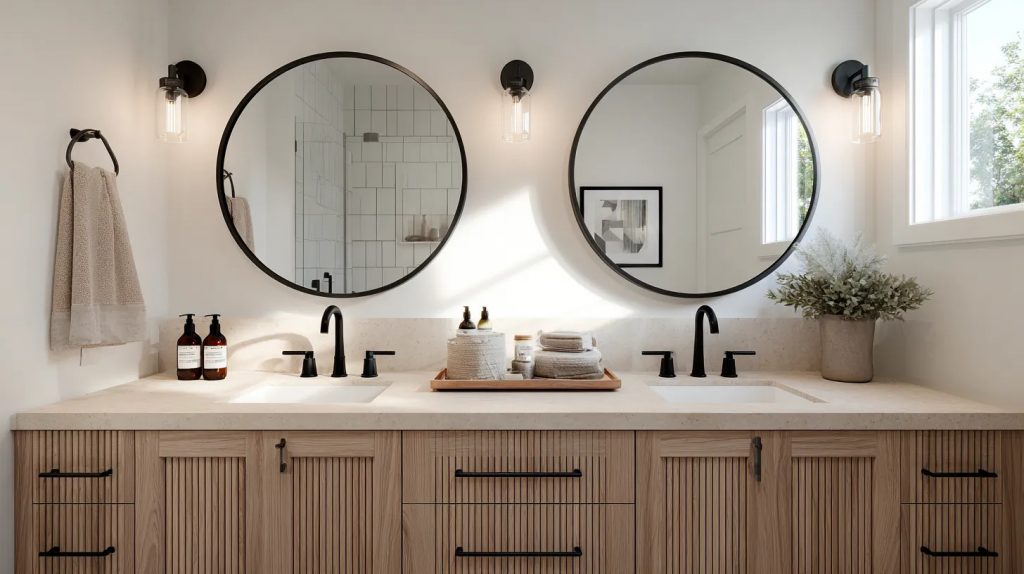
The heart of a double vanity’s design lies in how much room each person has around their sink. When sinks are too close together, it can quickly feel cramped—like sharing a desk that’s just a bit too small. That’s why aiming for roughly 18 to 24 inches between the centers of two sinks is a practical starting point. This range strikes a balance, giving each user their own space without forcing the vanity to sprawl excessively across your bathroom wall.
Beyond the gap between sinks, think about how much room you need standing in front of your vanity. Space isn’t just about elbow room at the sink but also about comfortable movement—reaching drawers, bending over, brushing teeth, or drying your face all demand enough buffer so you don’t feel boxed in.
This leads us to the importance of 30 to 36 inches of clearance in front of the vanity, a spacing rule designers commonly recommend for real-world comfort.
Imagine trying to maneuver in front of your sink while someone else reaches over to grab toothpaste; cramped quarters make this frustrating fast.
For bathrooms shared by multiple people, this clearance becomes even more critical. It reduces awkward collisions and allows people to move past each other smoothly.
Bathrooms serving families or roommates especially benefit from this thoughtful spacing—it gives everyone their moment alone without feeling like they’re constantly stepping on toes.
Now, these numbers are not arbitrary—they’re based on real-life usability and widely referenced planning standards in the kitchen-and-bath world. But remember, every bathroom layout is unique.
If you have extra space available, giving yourself even more room enhances usability further and adds a luxurious sense of openness.
In situations where space is tight, creative solutions come into play: floating vanities can open up floor area, slim-profile faucets reduce crowding at the sink edge, and choosing slightly shallower countertop depths can help preserve front clearance without sacrificing storage too much. These tweaks maintain comfort without losing functionality.
One additional detail often overlooked is the countertop space between each sink edge and the nearest side wall or tall obstruction. Leaving about 4 inches (or more) here helps prevent a sink from feeling “jammed into a corner” and gives you a bit of landing space for daily items.
Mastering these fundamental spacing rules lays a strong foundation as we next explore precise measurements and dimensions essential to designing vanities that fit perfectly within your unique bathroom space.
Standard Measurements and Dimensions
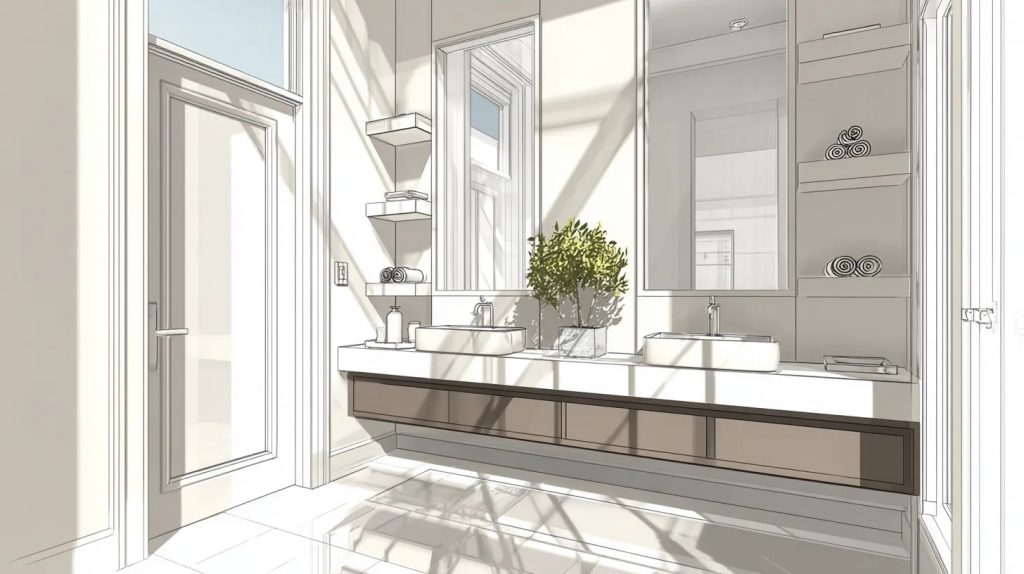
When selecting a double sink vanity, the width is often the primary consideration. Most experts agree that widths of 60, 72, and 84 inches represent practical increments catering to different bathroom sizes and user needs.
Sixty inches is regarded as the baseline minimum that still offers workable room for two sinks side by side, with enough countertop space for essentials without feeling overly cramped. Going up to 72 or 84 inches allows more personal space between users and often provides extra drawer and cabinet storage—a valuable asset in busy households.
To see how these widths translate into real layouts and storage configurations, it can help to browse a few examples of a double sink bathroom vanity.
If you’re aiming for the “sweet spot” size many shared bathrooms prefer, here are several 72 inch bathroom vanity options you can compare side by side.
Depth is an equally important metric, although it receives less attention. A standard depth of around 21 inches accommodates typical plumbing requirements while keeping the vanity ergonomic in daily use.
To polish off this measurement, countertops usually overhang slightly—about one to two inches—extending their functional surface to roughly 22 or 23 inches deep. This modest extension not only helps protect cabinetry below from water splashes but also lends a finished look to the vanity.
Height represents another crucial dimension that directly influences comfort and accessibility. Many vanities today land in the mid-30-inch range, which suits most users well and supports natural movement during activities like brushing teeth or shaving.
However, if there are specific mobility needs—for instance, wheelchair access—a customized height may be necessary. Lowering the vanity height or adjusting legroom beneath can make all the difference in creating a more inclusive bathroom environment.
With these fundamental measurements as our foundation, we now shift focus to strategies that maintain function and style when working within the constraints of smaller bathrooms or unconventional layouts.
Practical Spacing Tips for Small Bathrooms
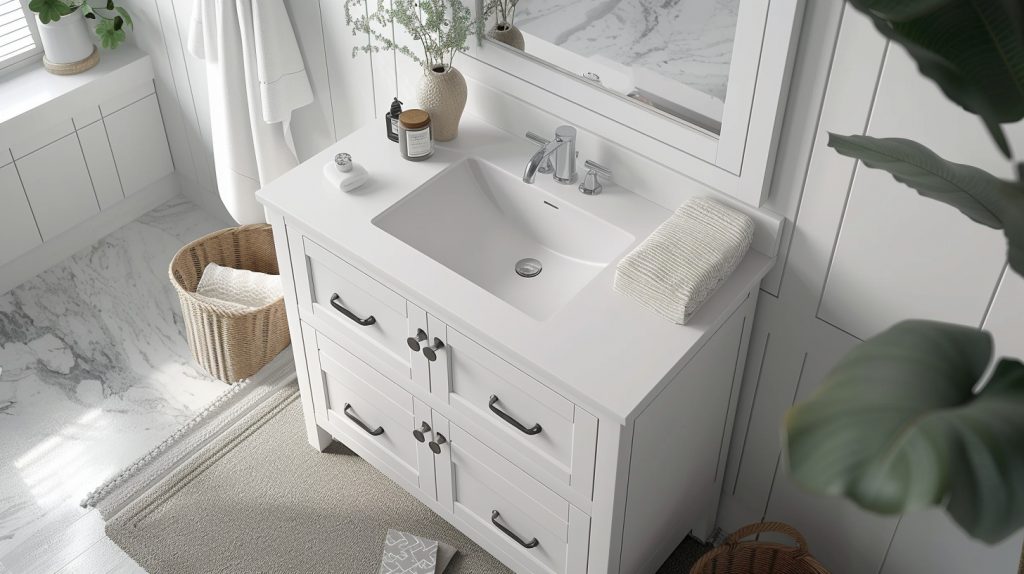
In small bathrooms, every inch counts, so choosing the right double-sink vanity quickly becomes an exercise in smart spatial management rather than simply picking a pretty piece of furniture. In tighter spaces, some homeowners choose 48 to 54 inches and use narrower sinks to make two stations possible—but comfort depends heavily on keeping enough clearance in front of the vanity and not crowding the sink area.
Take narrower sinks combined with slimmer faucets, for instance. By selecting these, you reduce the width demands without sacrificing basic functionality. Traditional bulky faucets and oversized basins can crowd the counter, making routine grooming feel awkward. Slim-profile faucets paired with undermount sinks also make cleaning easier—something that’s especially welcome when working within tight quarters.
Another effective strategy is wall-mounted faucets. These fixtures can free up countertop real estate and create a cleaner look by moving hardware off the surface area. This approach can also pair well with slightly shallower vanity depths—think 18 to 20 inches instead of the standard 21-plus inches—without making the room feel squeezed.
Why push for open floor space? Because front clearance is crucial for comfort. A minimum of 30 inches of open space from the vanity edge to opposite fixtures or walls helps you stand and move comfortably without feeling boxed in. In smaller bathrooms, this clearance can feel difficult, but combining compact widths with shallower depths and smart faucet choices can help preserve that breathing room.
Beyond measurements, consider visual lightness to avoid overwhelming a petite bathroom. Frameless mirrors, minimal shelving instead of bulky upper cabinets, and reflective countertops can help bounce light and make the space feel larger.
Choosing the right size vanity isn’t just about fitting sinks—it’s about designing around the flow and feel of your bathroom.
Measuring twice—and then measuring again—is essential here because real-world fixture sizes rarely match theoretical dimensions exactly. Plumbing specs vary, and sometimes leaving a small gap between the vanity back and wall can make installation easier by providing access for fittings and valves. This flexibility can mean the difference between a frustrating remodel and smooth execution.
At its core, practical spacing in tiny bathrooms requires a mindset shift: the goal isn’t merely to “fit” two sinks but to arrange every component so they complement each other without crowding, creating a usable space where everyday routines feel easier rather than more stressful.
With such careful consideration given to layout and functionality, the next step involves exploring fixtures that can make compact bathrooms feel more open through thoughtful design choices.
Space-Saving Fixtures for Compact Areas
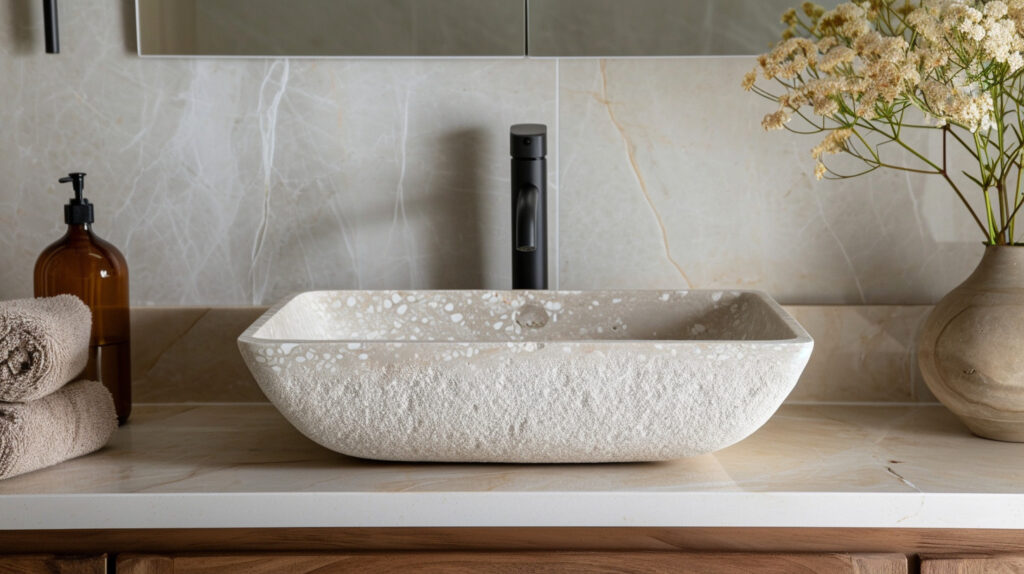
When working with limited square footage, every inch counts. That’s why selecting fixtures that maximize usability without swallowing precious space is crucial. One standout solution many designers like is the floating vanity. Unlike traditional vanities that sit on the floor, floating installations keep more floor visible, which can make the room feel more open.
If you’re still deciding on style and storage, browsing a curated set of bathroom vanity ideas can help you compare widths, finishes, and layouts before you finalize your plan.
Floating vanities also provide practical benefits. The cleared floor beneath makes cleaning easier and can offer space for small baskets or bins, depending on the layout.
While floating vanities create visual space, storage choices can have an equally big effect on how open the bathroom feels.
That’s where open shelving can help in the right bathroom. Replacing bulky cabinetry with carefully styled open shelves reduces visual weight. Of course, organization matters—random items on open shelves can make a space feel cluttered quickly. Keeping the look consistent helps the bathroom feel calmer and more intentional.
Moving from fixtures to installation, it’s important to ensure these choices work with your plumbing and your room’s exact dimensions.
Installation Considerations for Double Sink Vanities
Proper installation is the foundation upon which the usability and longevity of your double sink vanity rest. Beyond just aesthetic appeal, how well the vanity fits into your bathroom’s plumbing and spatial layout has a tremendous impact on daily comfort and maintenance ease.
Each sink in a double vanity requires its own drain and trap assembly. Ideally, these line up directly beneath the sinks. That means your drain rough-ins should match the sink placement you’ve planned. If this isn’t aligned, installers may need to run more complicated pipework that can eat into storage space inside the cabinet.
Equally important is how your vanity relates to surrounding walls. It’s natural to want it flush to the side walls for a built-in look, but leaving even a small amount of tolerance can make installation and future repairs easier—especially when connecting water lines, shutoffs, or replacing fittings later.
Let’s not overlook height considerations either. Many vanities now sit in the mid-30-inch range, and making sure the install matches the product spec matters more than people think. A vanity set too low can strain backs during daily use; too high can feel awkward for shorter users.
Floating vanities require special attention: they need proper wall reinforcement strong enough to handle the weight of the vanity plus daily use.
Installation precision isn’t just about fitting pieces together; it’s about envisioning how every interaction with your vanity will feel over years of daily use.
Paying attention to these installation details—from drain alignment to small wall tolerances and proper height—creates a double sink vanity that performs well and stays easier to maintain over time.
Understanding these nuances prepares us to examine how thoughtful layouts optimize bathroom space effectively and stylishly.
Layouts for Optimal Use of Space in Bathrooms
Designing a bathroom with a double sink vanity goes beyond simply fitting two basins side by side; it’s about creating harmony between structure and function. One effective way to increase comfort is by separating the room into “wet” and “dry” zones, where the vanity lives in the dry zone. That helps keep water splashes away from storage, outlets, and daily-use countertop items.
Another important detail is mirror planning. Giving each sink its own centered mirror (or at least clear mirror space) improves usability and reduces that feeling of fighting for the best spot. Centered mirrors paired with balanced lighting above each sink also make the vanity easier to use day-to-day.
To make the measurements more tangible, here’s a simple summary of the key spacing ranges:
| Component | Typical Range | Why It Matters |
|---|---|---|
| Double vanity width | 60, 72, 84 inches | Supports two sinks plus usable storage and counter space |
| Vanity depth | ~21 inches (18–20 if compact) | Shallower depths can improve front clearance in tight baths |
| Clearance in front | 30–36 inches | Improves movement and reduces collisions |
| Sink spacing (center-to-center) | 18–24 inches | Balances elbow room with realistic vanity widths |
| Side counter buffer | ~4+ inches to side obstruction | Prevents a sink from feeling cramped against a wall |
These ranges are grounded in practical experience and common planning standards, improving usability without causing spatial conflicts. By respecting them, your bathroom becomes not just a functional room, but a more comfortable space that supports real daily routines.
Applying smart spacing rules helps your double sink vanity feel balanced and usable, transforming your bathroom into a retreat that works as good as it looks. Careful planning today leads to lasting comfort tomorrow.